Bas Jan Ader’s Unfinished Journey in Bangkok
Explore Bas Jan Ader’s Bright at Midnight at Bangkok Kunsthalle, where three works invite reflection on vulnerability, memory and the limits of control.
At the Dutch artist’s first institutional presentation in Asia, three works invite us to reconsider where art’s value lies—and what happens when we can no longer keep things under control.
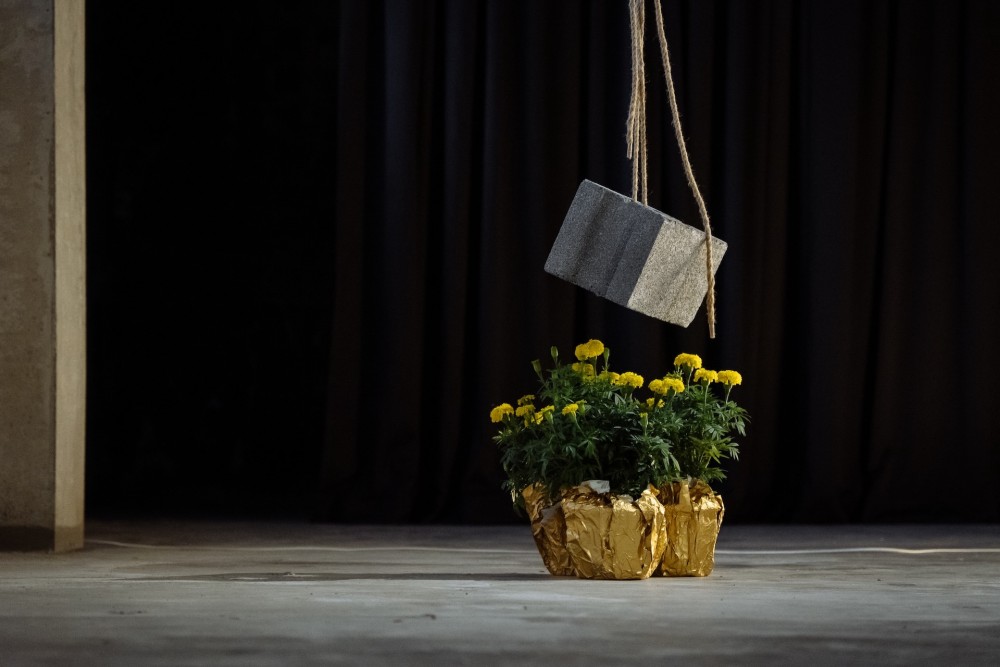
A concrete block hangs above objects that could easily be crushed. Nothing has happened yet. But knowing what might happen is enough to change the way we look.
There is little extravagance in the materials of “Bright at Midnight”, the Bas Jan Ader exhibition at Bangkok Kunsthalle. Its three works involve everyday objects, flowers, light, text and a short film. Yet their apparent simplicity opens onto questions that are harder to put aside: what we leave unsaid, how we live with uncertainty, and how much control we really have over what comes next.
Curated by Leonardo Orion Dal Colle, the exhibition runs until 10 January 2027 inside the former printing house in Bangkok’s Chinatown area. Presented with Meliksetian | Briggs and the Estate of Bas Jan Ader, it marks the first institutional presentation of the artist’s work in Thailand and Asia.
Born in the Netherlands in 1942, Ader studied and worked in California, developing a practice that moved between performance, film, photography and installation. In 1975, he disappeared in the Atlantic while attempting to sail from the United States to Europe in a small boat, part of his project In Search of the Miraculous.
That disappearance inevitably shapes how his work is encountered today. But there is more to this exhibition than the story of an artist who never returned. It offers an opportunity to spend time with the ideas and decisions that preceded his final voyage.
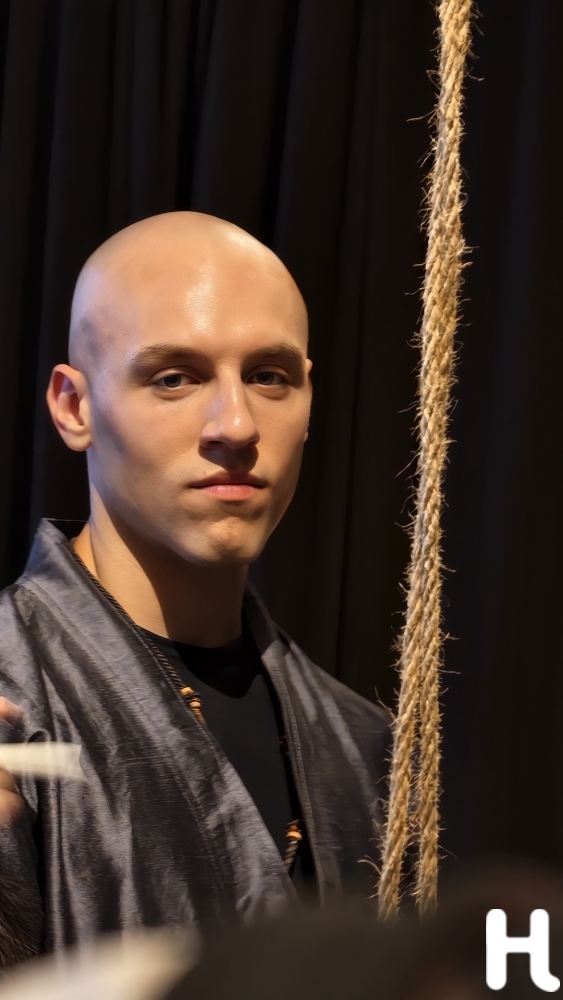
For Dal Colle, this begins with reconsidering our relationship with art itself.
“The main take away from this exhibition should be to rethink of the way that we engage with art solely as an object,” he says.
His concern is the tendency to approach art primarily through ownership and financial value. He hopes the exhibition encourages audiences in Thailand to look beyond the fascination with art as an asset class, while allowing artists room to develop practices grounded in research, experimentation and engagement with wider social, political and cultural questions.
Here, the materials offer only part of what there is to see. Much of the work takes place in our anticipation, our memories and what we bring into the room.
Living with what might happen
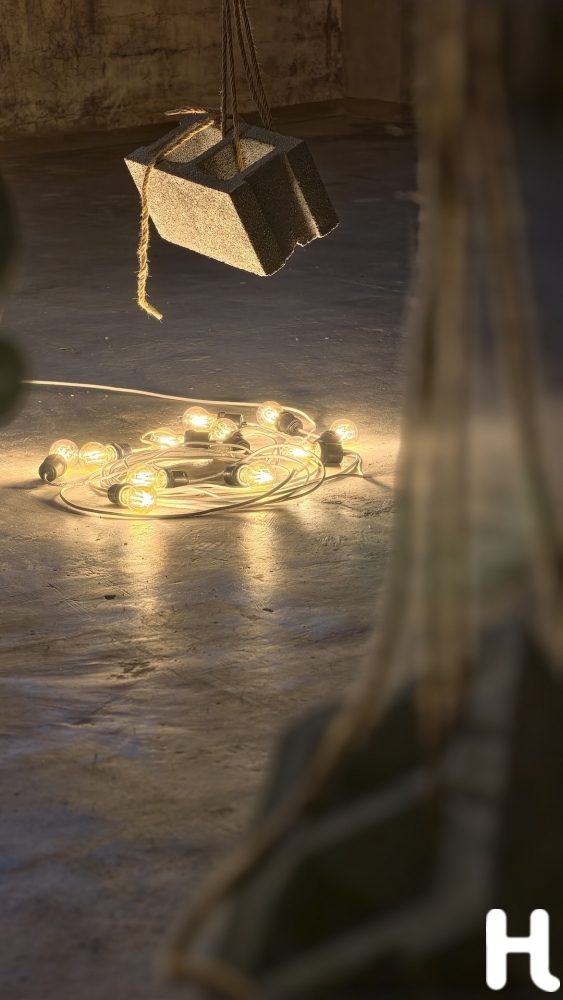
The title Light vulnerable objects threatened by eight cement bricks (1970) describes a situation with unsettling directness.
Concrete blocks hang from ropes above groups of objects. In the Bangkok presentation, these include beer cans, flowerpots and light bulbs. The weight overhead makes their fragility suddenly apparent. Even an ordinary object becomes difficult to regard casually when something heavy is suspended above it.
The work’s history includes a performance in which the ropes are cut, allowing the blocks to fall onto the objects below. Destruction is therefore a possibility built into its structure, rather than an accidental interruption.
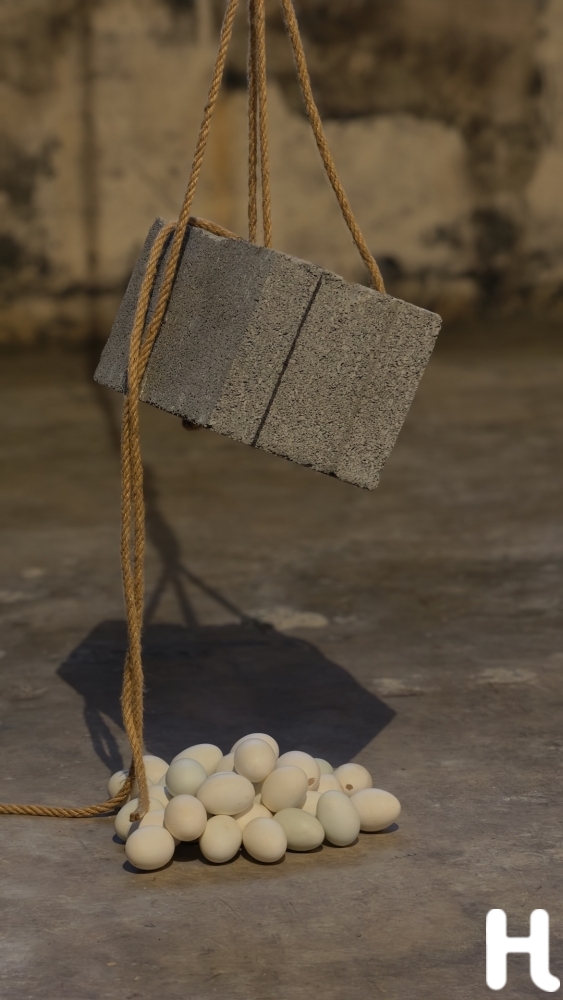
According to plans discussed during our visit, the Bangkok installation will undergo this activation during Galleries Night Bangkok in November. The falling blocks will change what visitors subsequently encounter, and the action will be filmed, adding a moving-image record to the work’s unfolding life.
For now, though, the encounter is with waiting.
You might find yourself thinking about an accident, a threat that has not yet materialised, or the effort involved in keeping something precarious intact. These are possible responses rather than instructions for decoding the work. Its physical arrangement gives us enough to begin: something vulnerable below, something heavy above, and a rope holding the two apart.
What remains unsaid
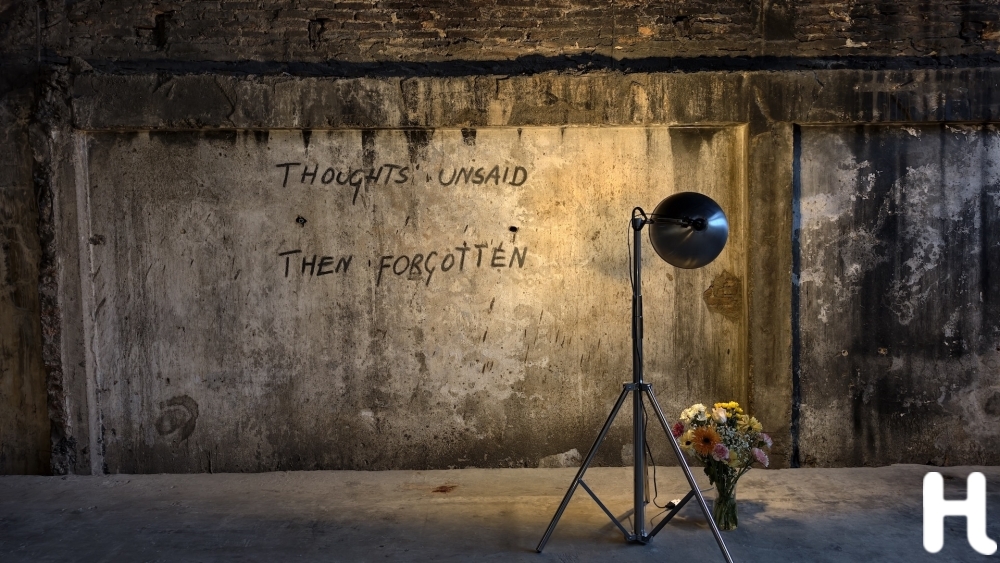
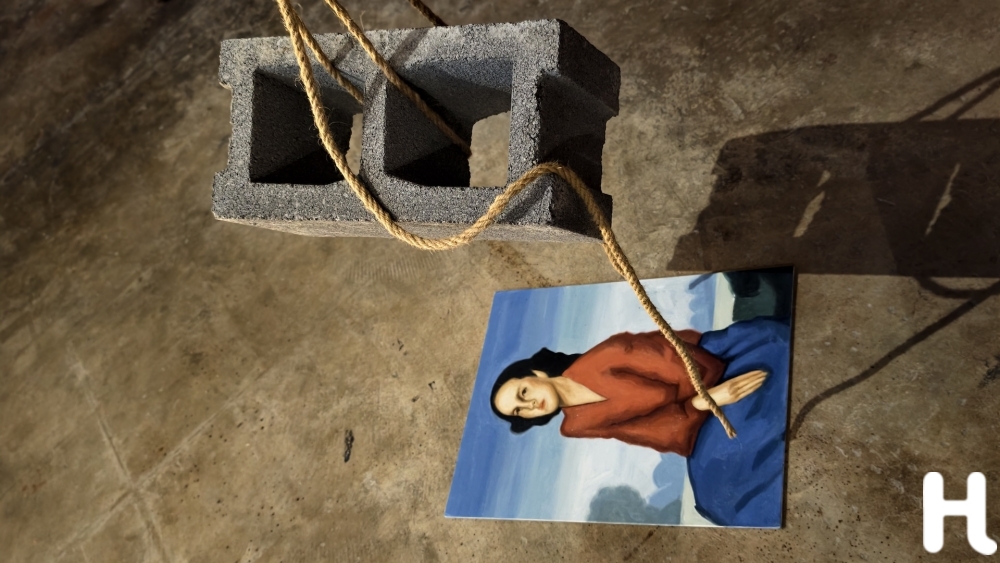
Thoughts unsaid, then forgotten (1973) brings together a phrase written in oil stick, a clamp light on a tripod, flowers and a vase.
The materials are modest. The phrase can take longer to leave behind.
It may call to mind something we meant to tell another person, an idea that disappeared before we could write it down, or a feeling that never quite found words. Giving the thought a visible form creates a small paradox: we are reading about something that was never expressed.
Alongside the text, the flowers introduce a different measure of time. Their condition can change while the exhibition continues. What appears before us is subject to duration, rather than sealed against it.
The work offers a point of contact with experiences that do not require specialist knowledge of conceptual art. Most of us know something about failing to say what we mean—or discovering, later, that the moment to say it has passed.
Before the voyage
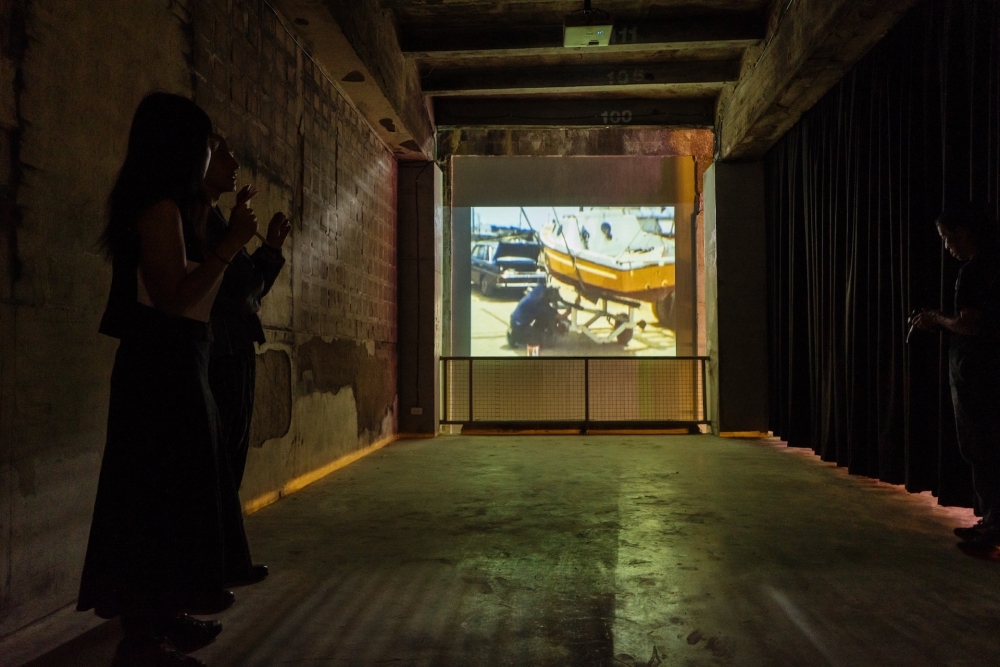
The third work, Launch of the Ocean Wave (1975), brings Ader’s final journey into view through footage of the preparations that preceded it.
Shot on Super 8 and transferred to digital, the film runs for six minutes and 39 seconds. According to the exhibition’s press materials, this archival footage is being screened publicly for the first time.
Knowing what followed makes these preparations difficult to watch as an ordinary beginning. A boat being readied for a journey carries the weight of a future its participants could not yet know.
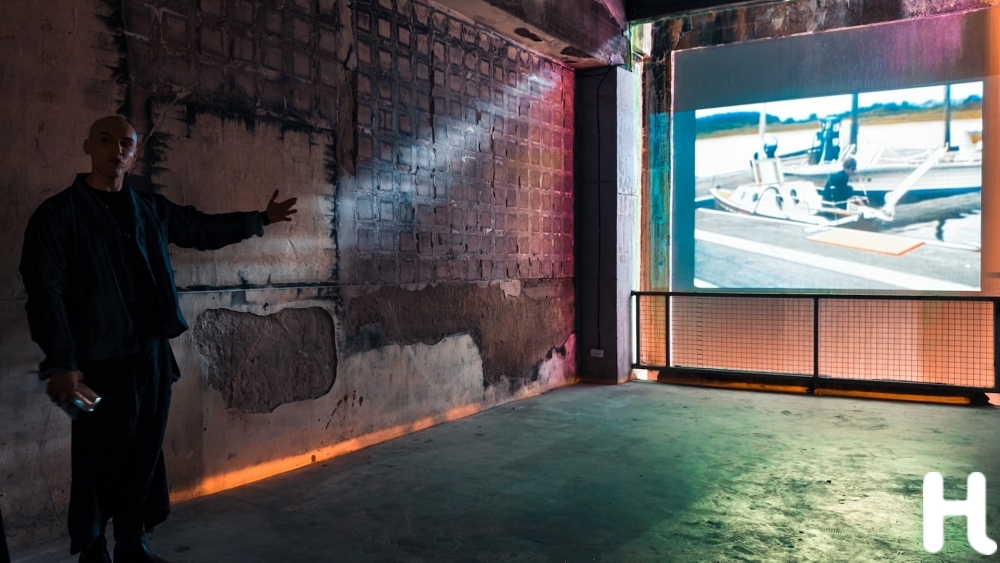 In the interview, Dal Colle describes Ader’s practice as a continuing exchange between works: an action or idea could feed into whatever came next. Seen this way, the film also raises a question about where an artwork begins. Does it begin with the voyage, with its preparation, or with the thought of undertaking it?
There is no need to turn Ader’s disappearance into an answer. The footage allows us to look at the preparations themselves, while recognising how profoundly later events affect our understanding of them.
A different City of Angels
Bringing these works to Bangkok involves more than reproducing their physical components.
The exhibition’s title comes from a memory shared by Tom Jimmerson, a former student of Ader’s, of nocturnal walks through Los Angeles. Surrounded by the city’s lights, Ader would observe that it was bright at midnight. That memory now finds another setting in Bangkok, whose Thai name, Krung Thep, also means City of Angels.
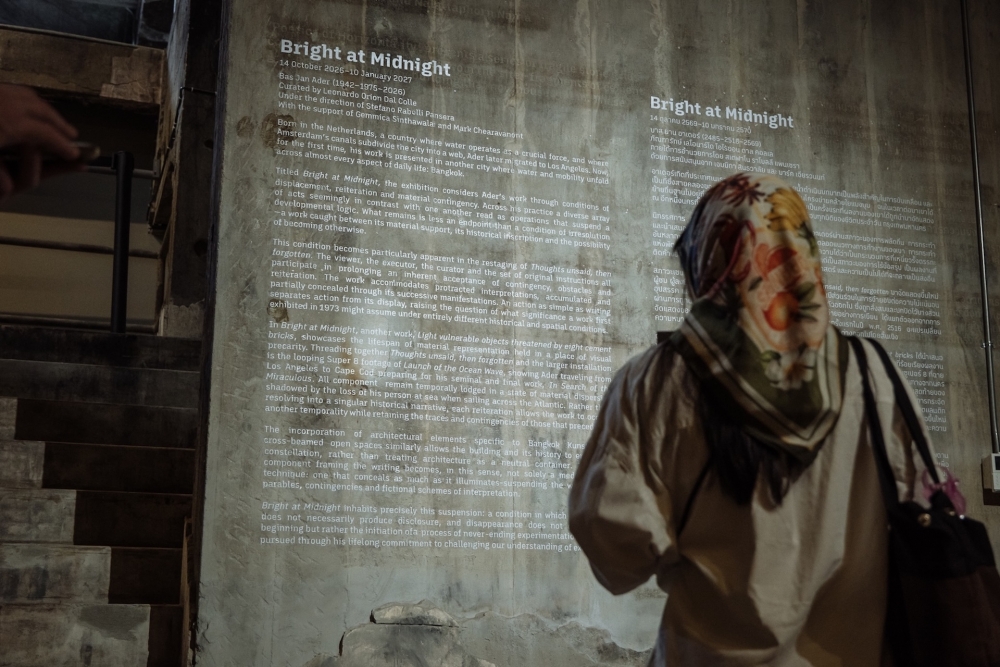 For Dal Colle, Bangkok Kunsthalle’s building was central to the decision to present the work here. Its unfinished architecture and continuing evolution suggested a context in which the installations could acquire new relationships with their surroundings.
He connects that changing building to a changing city, while acknowledging that expansion does not benefit everyone equally.
“With changes and expansion, there’s always someone that is left out, right?” he says.
He also makes a practical distinction between the relatively small cost of reproducing the works’ materials and the institutional costs—such as loans and insurance—that can determine whether an exhibition happens at all. His existing relationship with the estate helped make this presentation possible.
This is part of what makes “Bright at Midnight” worth considering beyond its spare appearance. The exhibition brings attention to the thought, negotiation and research behind what may initially look effortless.
Dal Colle describes the works as demanding very little from viewers at first, but potentially much more afterwards. He hopes visitors approach the exhibition as learners and participants, with the coming performance making that participation more explicit.
There is no guarantee of an immediate revelation. You can stand before the objects, read the words and watch the film, then find that a connection arrives only later.
A block remains suspended. A flower changes. A thought goes unspoken.
What stays with you may depend on what you brought with you in the first place.
.......
“Bright at Midnight” by Bas Jan Ader, curated by Leonardo Orion Dal Colle, is on view at Bangkok Kunsthalle, Pantachit Alley, from 14 October 2026 to 10 January 2027. Open Wednesday–Sunday, 2–8pm; closed Monday and Tuesday. Follow Bangkok Kunsthalle on Facebook or @bangkok_kunsthalle on Instagram for programme updates.
PHOTO by Samatcha Apaisuwan, Warunee Maneekum/ HappeningBKK service
#BasJanAder #BrightAtMidnight #BangkokKunsthalle #ConceptualArt # #HappeningBKK