Dib Bangkok Opens Its Second Chapter with “Giving Life,” Where Art Breathes, Moves and Changes
Dib Bangkok’s Giving Life brings Alexander Calder into dialogue with 33 artists through 160+ works exploring movement, transformation and what makes art alive.
Anchored by Alexander Calder and spanning more than 160 works by 33 artists, Dib Bangkok’s second exhibition asks what happens when art behaves less like an object — and more like something alive.
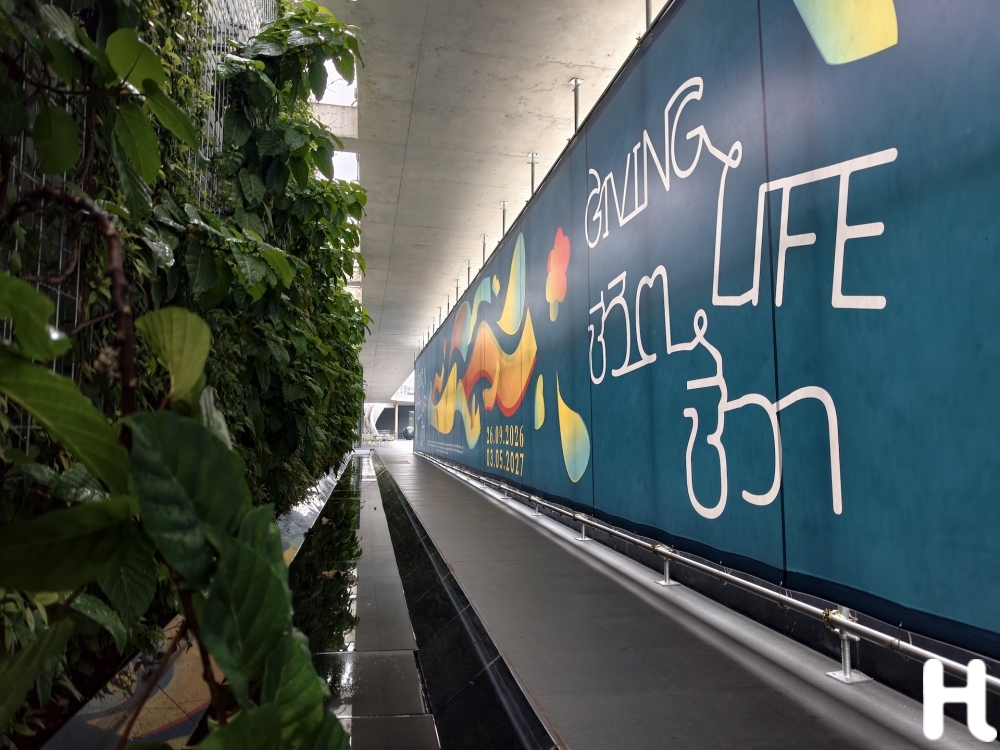 What is life without movement?
It is a deceptively simple question at the heart of Giving Life (ชีวิต ชีวา), the second exhibition at Dib Bangkok, opening on September 26, 2026.
Following (In)visible Presence, the museum’s inaugural exhibition, Giving Life takes movement, transformation and change as its starting points, bringing together more than 160 works by 33 Thai and international artists across three floors of the museum. Sculpture, painting, film, installation and performance meet works that breathe, dance, deteriorate, respond to their surroundings — and, in some cases, need the audience in order to come alive.
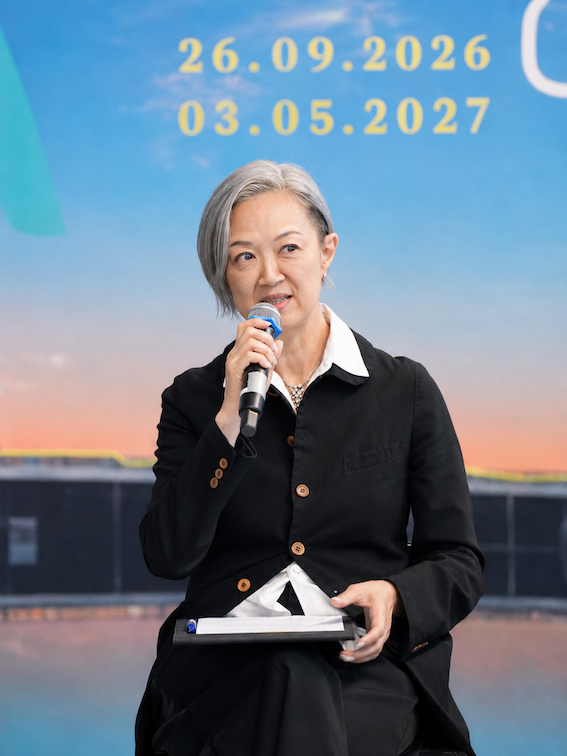
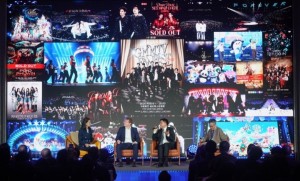
For Dr. Miwako Tezuka, Director of Dib Bangkok, the exhibition is also the next chapter in the life of the museum itself.
Speaking at the exhibition announcement, Tezuka described the museum as a “tiny infant” compared with the longevity of art. She recalled the Latin phrase Ars longa, vita brevis — “art is long, life is short” — famously embraced in Thailand by Silpa Bhirasri, the father of modern Thai art.
Dib Bangkok only opened in December 2025. Tezuka likened its first exhibition to invisible molecules coming together to form the museum’s first strand of DNA. Now that organism is beginning to move.
“A museum is like a living organism,” she said, describing a place that needs artists, visitors, supporters and its wider community to nourish it and allow it to grow.
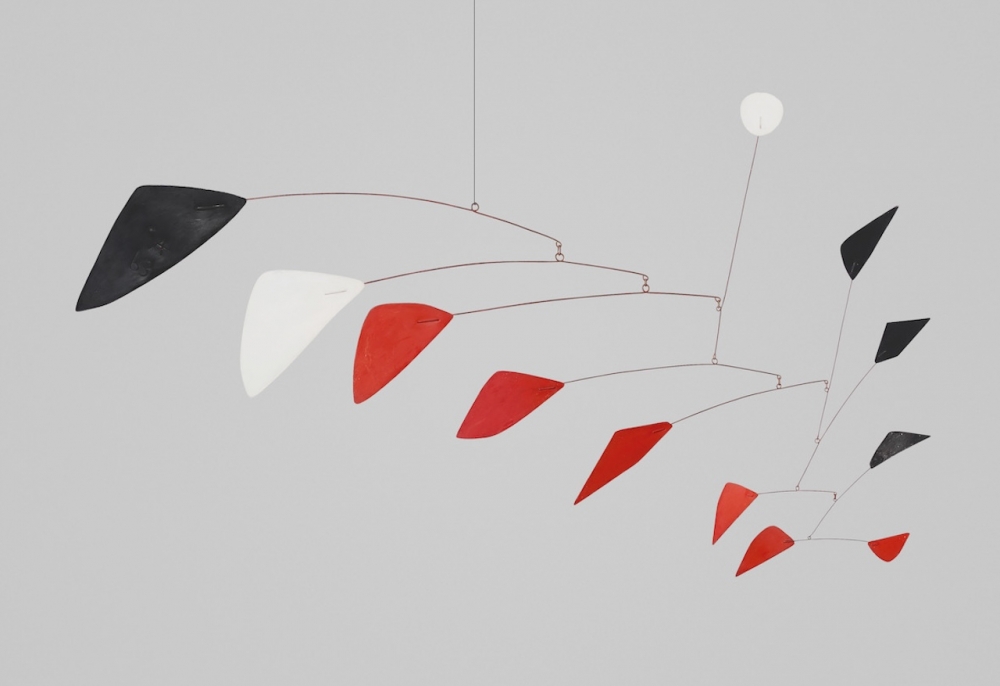
And if life requires movement, there could hardly be a more fitting artist with whom to begin than Alexander Calder.
From Calder’s Mobile to Art That Refuses to Stay Still
Calder transformed the possibilities of 20th-century sculpture by allowing it to move.
His delicately balanced Mobiles respond to shifts in air, changing their configurations almost imperceptibly. Philosopher Jean-Paul Sartre once described Calder’s works as strange creatures existing somewhere between matter and life.
Two works by Calder anchor Giving Life, including a monumental-scale work being presented in Thailand. The exhibition also coincides with the 50th anniversary of Calder’s death and a century since he moved from the United States to France, joining international commemorations of the artist and his legacy.
But Calder's relationship with Thailand reaches considerably further back.
In 1975, during the final months of the Vietnam War, Calder’s Circus at the Bhirasri Institute of Modern Art became the first exhibition of his work in Thailand. It coincided with a period when Thai artists returning from abroad were experimenting with abstraction, installation and performance, helping expand the definition of what art could be.
Giving Life revisits that history through an archive of more than 60 historical materials, tracing artistic exchanges around Calder and the development of experimental practices in Thailand. The story moves through artists including Vasan Sitthiket, Surasi Kusolwong, Sutee Kunavichayanont and Somboon Hormtientong, and toward ideas of “art for life”, when art increasingly moved beyond conventional forms and into society.
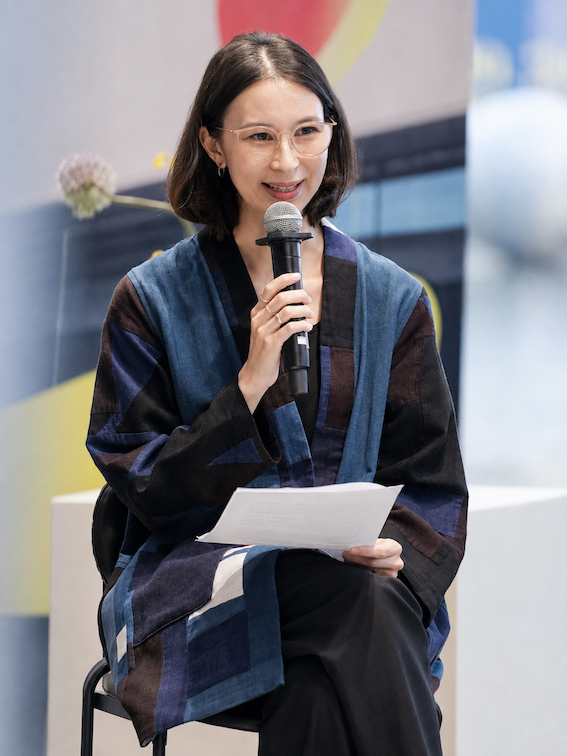
From that historical starting point, curator Ariana Chaivaranon expands the idea of movement into a much larger question:
What makes something alive?
A Love Letter to Artists Who Give Life to Materials
Ariana described Giving Life as “a love letter to artists” — to people who give life to materials.
The artworks, she explained, not only behave like living organisms; they encounter many of the same conditions that define our own existence: vulnerability, unpredictability, endings and new beginnings.
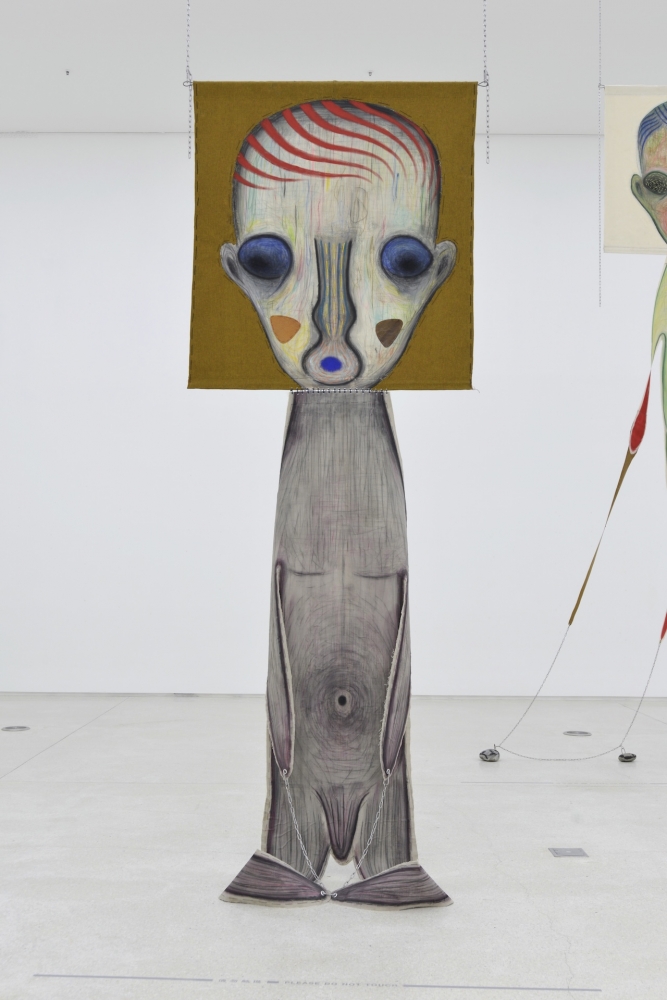
Materials throughout the exhibition already carry lives and histories of their own: salvaged machines, living plants and remnants of war. Some works can be eaten. Some dance. Some breathe. Some grow, while others gradually break down.
Rather than simply imitating nature, the artists turn their materials into what Ariana describes as “creatures in their own right” — things with which we can form relationships and, occasionally, see ourselves reflected.
That idea takes many forms.
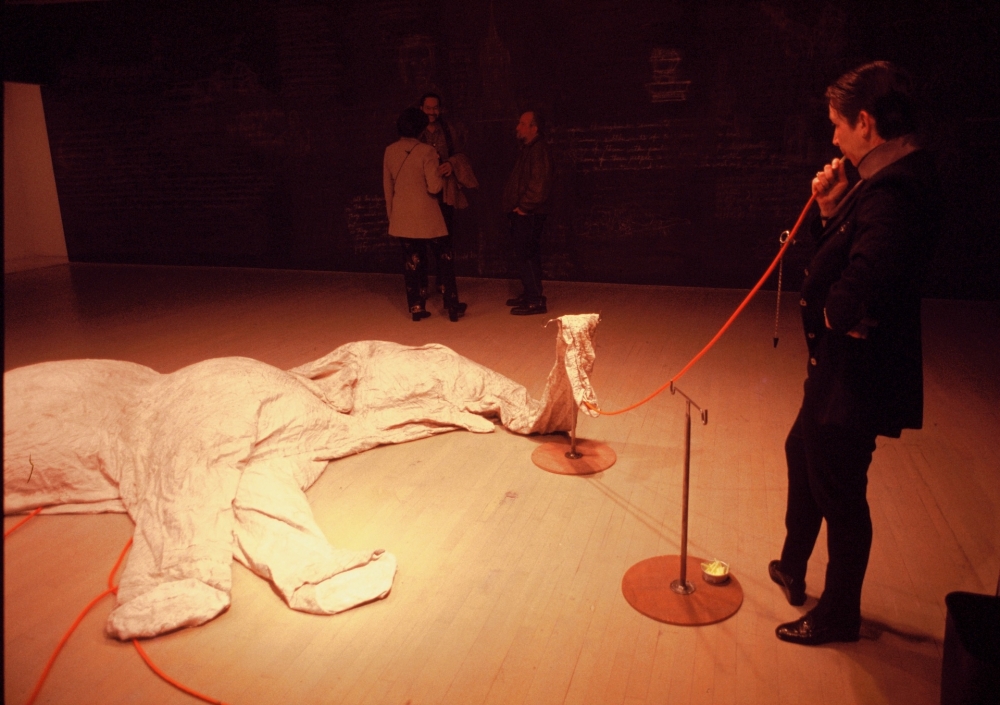
Sutee Kunavichayanont’s interactive work based on Elephant (Breath Donation) invites visitors to literally donate their breath, blowing air into a white elephant sculpture and participating in a continuous cycle of inflation and deflation.
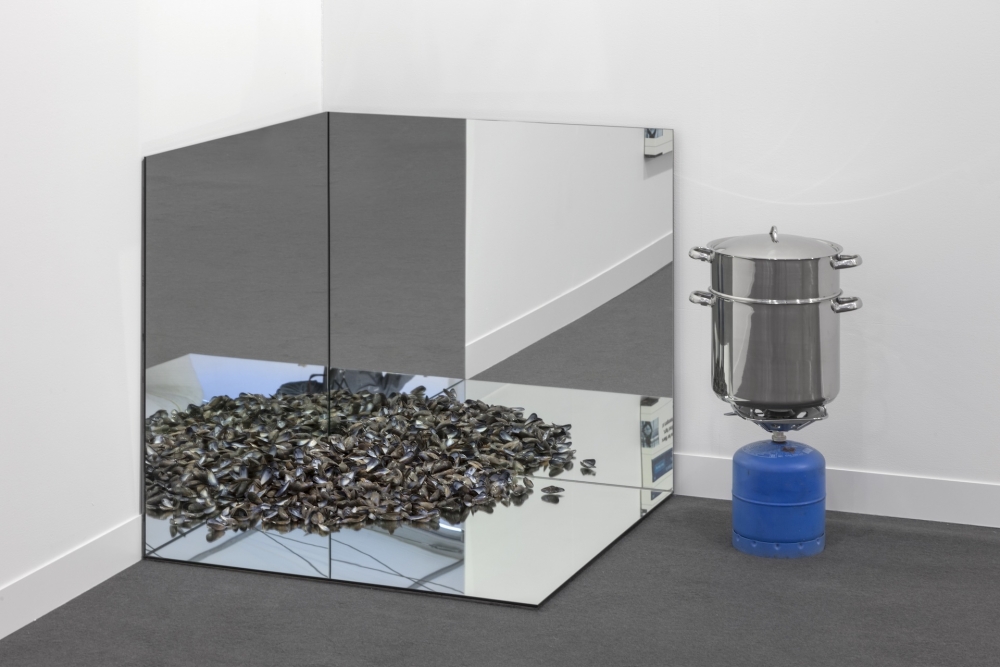
In works by Rirkrit Tiravanija, the gallery becomes a social space where food is prepared and eaten together. The artwork exists not simply as an object but through a situation created between artist and participants.
Rachel Youn, meanwhile, constructs kinetic sculptures from second-hand machines. They dance until their mechanisms gradually wear down — their persistence and eventual deterioration uncannily echoing our own dependence on machines, ageing bodies and finite lives.
Elsewhere, Paul Chan’s Breathers draw partly on the artist's experience of recognising people through movement rather than their faces. Each inflatable character acquires a personality through its gestures.
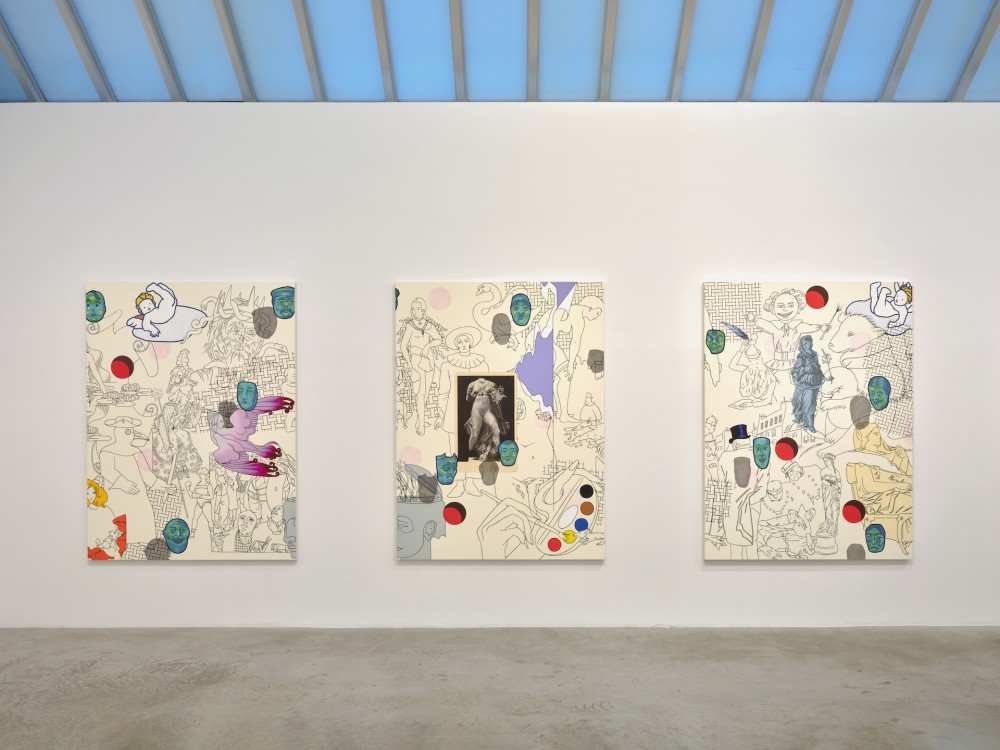
The humanoid figures of Izumi Kato hover somewhere between the primeval and futuristic, while Caitlin Keogh’s monumental Procession paintings and works by Cecilia Vicuña, Tobias Rehberger, Yukinori Yanagi and others push the exhibition’s ideas of animation and transformation in other directions.
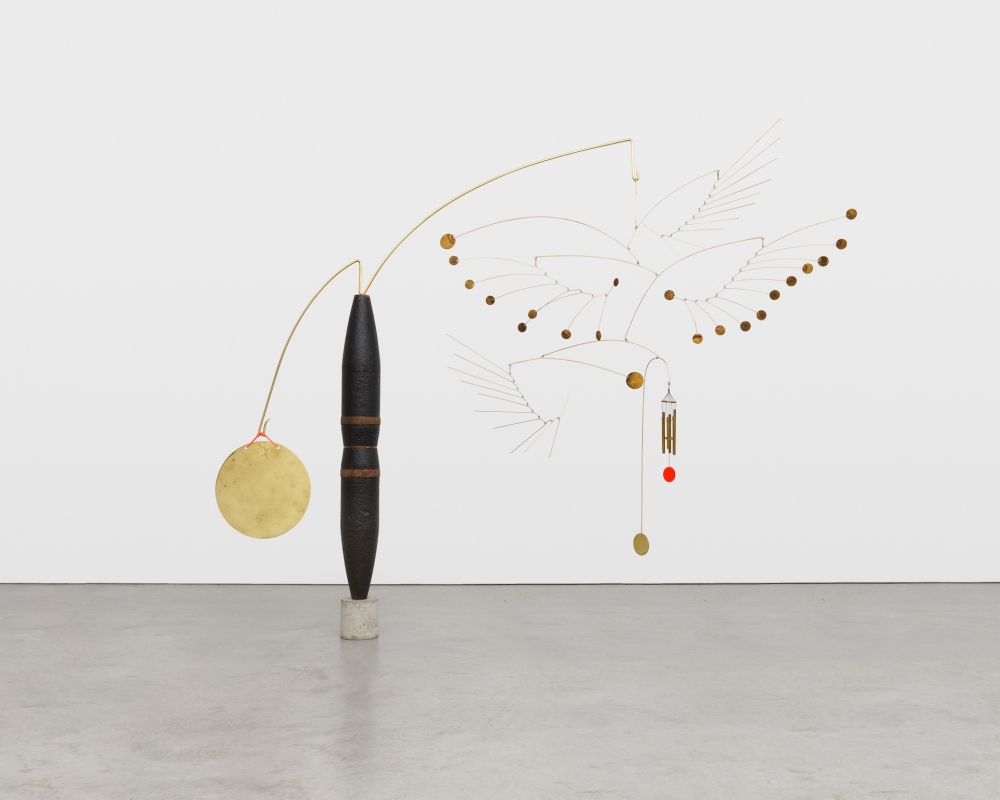
And then there is Tuan Andrew Nguyen’s Tremor (2025).
Made from materials including unexploded ordnance, Nguyen transforms remnants associated with conflict into a kinetic work capable of movement. In the context of Giving Life, destruction is not erased from the material's history; instead, the material is given another existence.
Many artists in the exhibition, Ariana noted, have worked against backgrounds of war, economic collapse or the erosion of basic freedoms. Motion and transformation can therefore become more than formal artistic devices. They can be ways of insisting upon life when life itself cannot be taken for granted.
When the Viewer Gives Life to Art
This may ultimately be what makes Giving Life particularly interesting to experience in person.
The exhibition does not ask us simply to look at objects.
Visitors breathe into them. Move them. Eat with them. Walk around them. Watch them dance and gradually wear themselves down.
The public programme will extend that relationship further through recurring movement performances engaging with works by Paul Chan, Cecilia Vicuña and Rachel Youn.
For Chaivaranon, these artworks mirror the uneven experiences of our own lives — the ways we work, play, perform and express ourselves. Their refusal to remain still points toward perhaps the most unavoidable characteristic of being alive: change.
And that brings Giving Life back to Calder.
A Mobile never assumes one permanent configuration. Air enters the room, the balance shifts and the work becomes something slightly different from what it was a moment before.
Across more than 160 works, Giving Life takes that simple act of movement and allows it to grow into something much larger: a way of thinking about bodies, histories, materials and our own capacity to change.
Perhaps an artwork does not become alive only when an artist makes it.
Perhaps it comes alive again when someone walks into the room.
September 26, 2026 – May 3, 2027
Dib Bangkok
111 Soi Sukhumvit 40, Phra Khanong, Khlong Toei, Bangkok
From September 26, 2026:
Thursday–Tuesday, 10:00–19:00
Closed Wednesday
Admission: THB 700 general admission | THB 550 Thai residents | THB 250 students aged 18–22 | THB 150 students aged 7–17
Advance tickets available through Dib Bangkok.
#DibBangkok #GivingLife #AlexanderCalder #ContemporaryArt #KineticArt #HappeningBKK